Making it simpler, faster, and more transparent to find and purchase a motorhome online
Svea Husbilar is a leading Swedish motorhome retailer specialising in new and pre-owned recreational vehicles. The project focused on redesigning the online customer journey to better support the complex research and comparison process involved in purchasing a high-value vehicle.
As customer expectations evolved, the existing website struggled to support confident decision-making. The goal was to create a modern, user-centred experience that helped customers throughout their buying journey while increasing lead generation for the business.
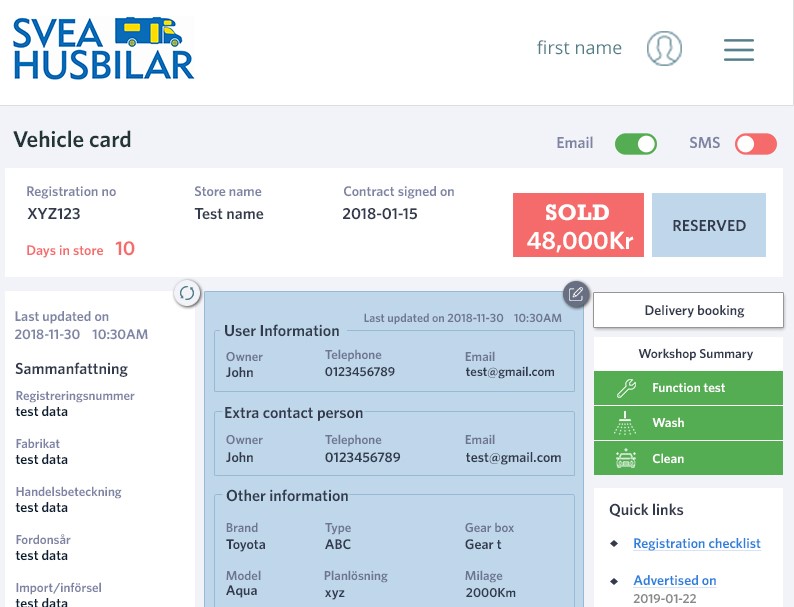
Led end-to-end UX design
I was responsible for driving the user experience from discovery through delivery, working closely with stakeholders and developers to redesign the digital buying journey.
A significant financial investment that requires extensive research, comparison, and confidence before purchase
Buying a motorhome is one of the most considered purchases a consumer will make. The existing experience presented real barriers — vehicle information was hard to evaluate, filtering didn't match how customers actually searched, and mobile usability issues created friction at every step.
Customers often had to contact sales representatives to obtain information that should have been readily available online, reducing conversion and increasing pressure on the sales team.
Identified pain points
Through competitor benchmarking, user behaviour analysis, and customer research, five recurring challenges emerged that shaped the design approach.
Four focus areas to transform the buying journey
The design approach was grounded in the customer buying journey — from initial discovery through to lead generation — with four strategic focus areas shaping every decision.
Mapped the customer journey to understand how buyers research, evaluate, and decide — identifying key moments where the experience needed to work harder.
- •Research behaviours and information seeking
- •Vehicle evaluation criteria
- •Purchase motivations and key decision moments
Introduced improved search, filtering, and vehicle categorisation to help customers find what they were looking for faster and with less effort.
- •Improved search and advanced filtering
- •Vehicle categorisation aligned to customer needs
- •Clearer content hierarchy on listings
Designed tools and content structures that helped users compare vehicles, understand specifications, and build the confidence needed to move forward.
- •Vehicle comparison tools
- •Clearer presentation of specifications and pricing
- •Trust signals and purchase confidence elements
Created clearer pathways for customers to take the next step — whether booking an appointment, requesting more information, or contacting the sales team.
- •Test drive and appointment booking
- •Information requests and enquiry forms
- •Contextual CTAs at key decision points