Building a UX practice from the ground up — while designing one of the product's most complex features
When I joined IFS Service Management in late 2021 as the founding UX Designer for the team, there was no established UX practice within the product area. While the development process included a dedicated design and prototyping phase, user-centered design methods were not yet embedded into the workflow.
This project focused on designing a new Dispatch Console experience within IFS Cloud — helping dispatchers efficiently schedule and manage field service work. At the same time, I worked to introduce Design Thinking into the team's development process, creating a repeatable foundation the team could build on.
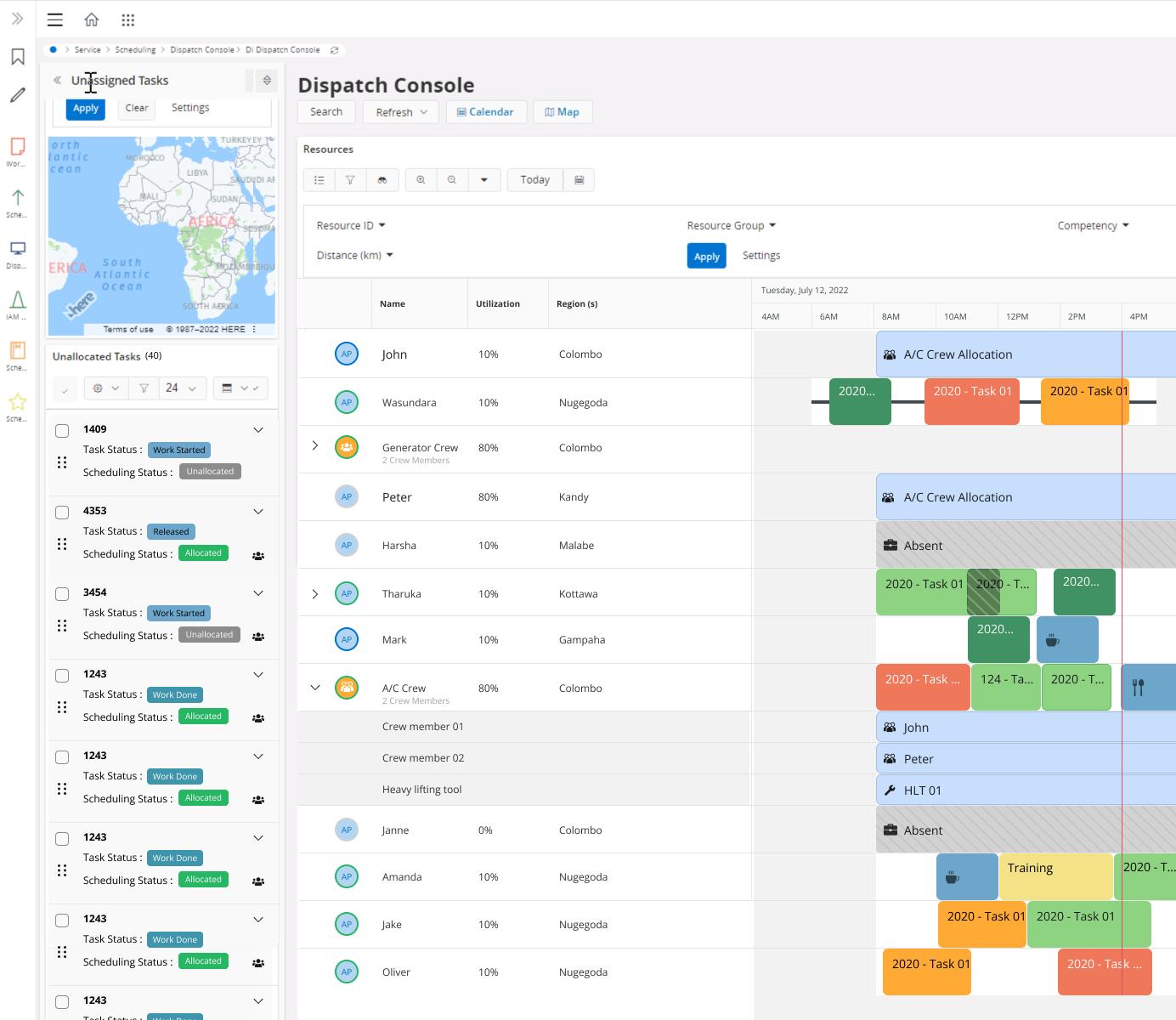
The team was exploring how to modernize scheduling and dispatching workflows for field service organizations. Dispatchers relied on complex legacy tools to allocate work to technicians and crews, often managing large volumes of activities across multiple locations, skills, and shift patterns.
Lead end-to-end process
I was responsible for establishing the UX process and driving all design activities for the initiative — from early discovery through to prototype validation and developer handoff.
One solution for many dispatching realities
Field service organizations operate in highly dynamic environments. Dispatchers must continuously assign work to technicians and crews while balancing availability, skills, locations, priorities, and shift schedules.
Different customers followed different operational models — and we needed a flexible solution that could accommodate all of them within the constraints of the IFS Cloud framework.
Understanding the problem
Rather than jumping directly into solution design, we focused on building a thorough understanding of the problem space through four research streams.
Turning research into a shared understanding
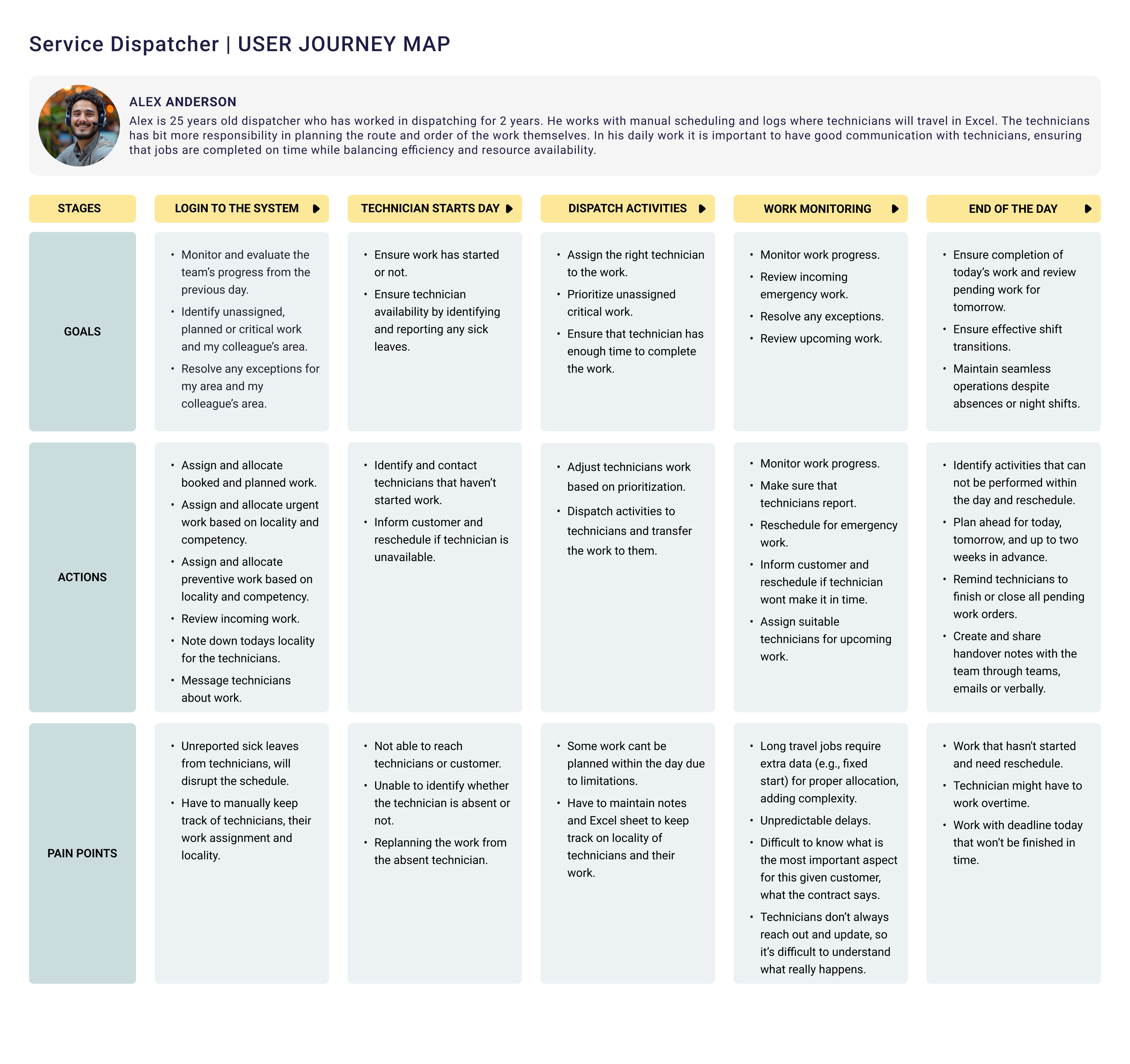
After consolidating research findings, we mapped the broader dispatching experience through three key artifacts that helped align the team around user needs.
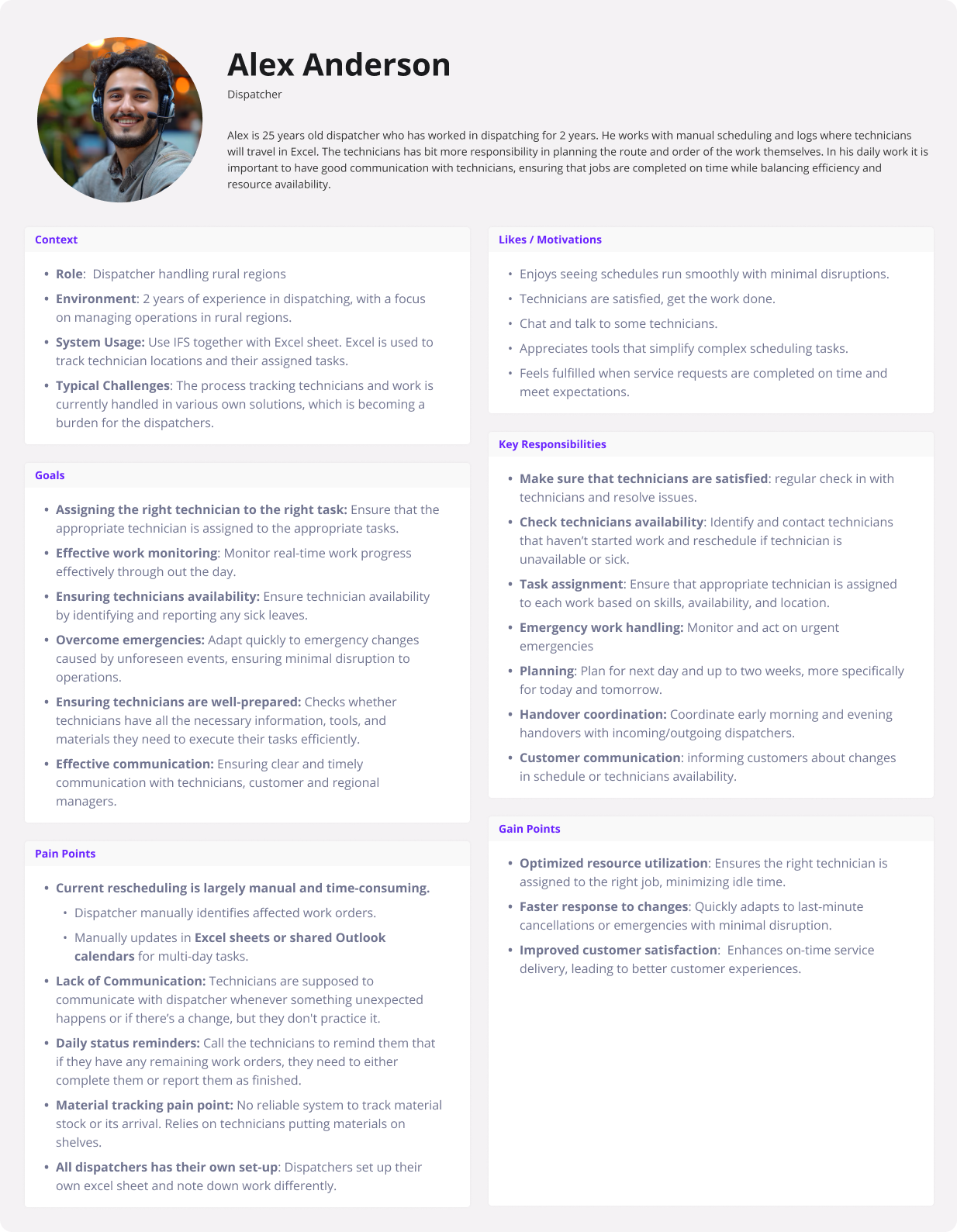
Lightweight personas representing different dispatcher behaviors and goals — keeping ideation and prioritization decisions grounded in real user context.
Journey maps surfaced critical decision points, frustrations, and information gaps. Key insight: dispatchers needed to cross-reference multiple views before making a single scheduling decision.
End-to-end flows mapped dependencies, decision branches, and high-friction interactions — giving the team a shared picture of dispatching complexity.
Crew scheduling added a layer of complexity individual technician scheduling did not
Research revealed that dispatchers managing crew-based workflows had information needs that couldn't be met by the existing interface. Before making any allocation decision, they needed answers to a set of questions — often simultaneously.
Dispatchers need a fast and intuitive way to identify suitable crews and allocate work, while maintaining clear visibility into crew composition, availability, skills, and schedules — all without leaving their planning context.
Three concepts, each addressing a different dispatcher mental model
Using research insights, we explored multiple approaches to supporting dispatch workflows. Each concept addressed different user behaviors observed during research.
Gantt-Based Scheduling
A timeline-focused experience that allowed dispatchers to manage schedules visually and understand resource utilization over time. Best suited for planners who think in terms of time blocks and resource capacity.
Map-Centric Dispatching
A location-based approach that emphasized geography and proximity when making scheduling decisions. Designed for dispatchers whose primary concern is ensuring the right technician is in the right place.
Calendar View
A traditional calendar experience optimized for time-based planning activities — familiar to users coming from simpler scheduling tools and suited for day-to-day appointment-style allocation.
Prioritization Through Story Mapping
To align business goals with user needs, I facilitated user story mapping workshops with product managers and engineers. This helped the team visualize the end-to-end user journey, identify MVP capabilities, prioritize high-value functionality, and create a phased delivery strategy. The story map became a critical planning artifact used across design, product, and engineering throughout the project.
Testing interaction models before committing to implementation
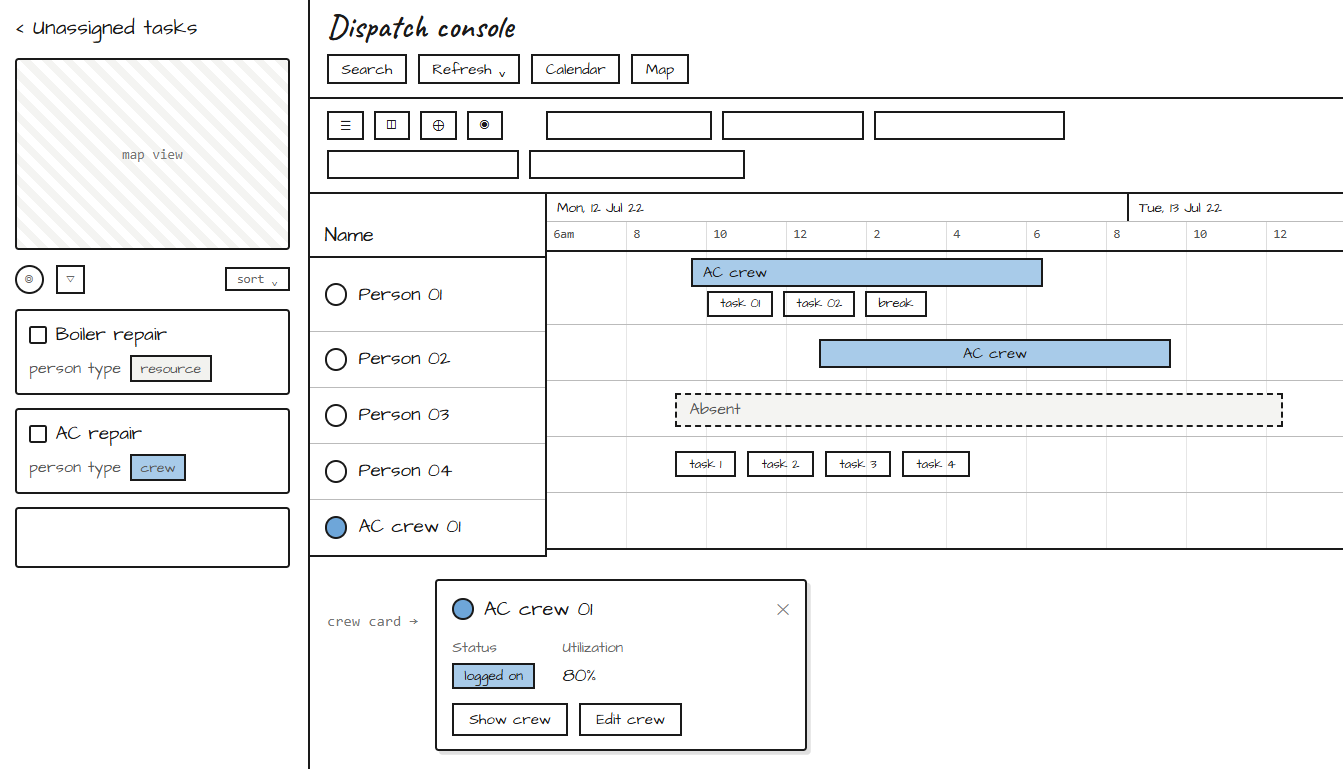
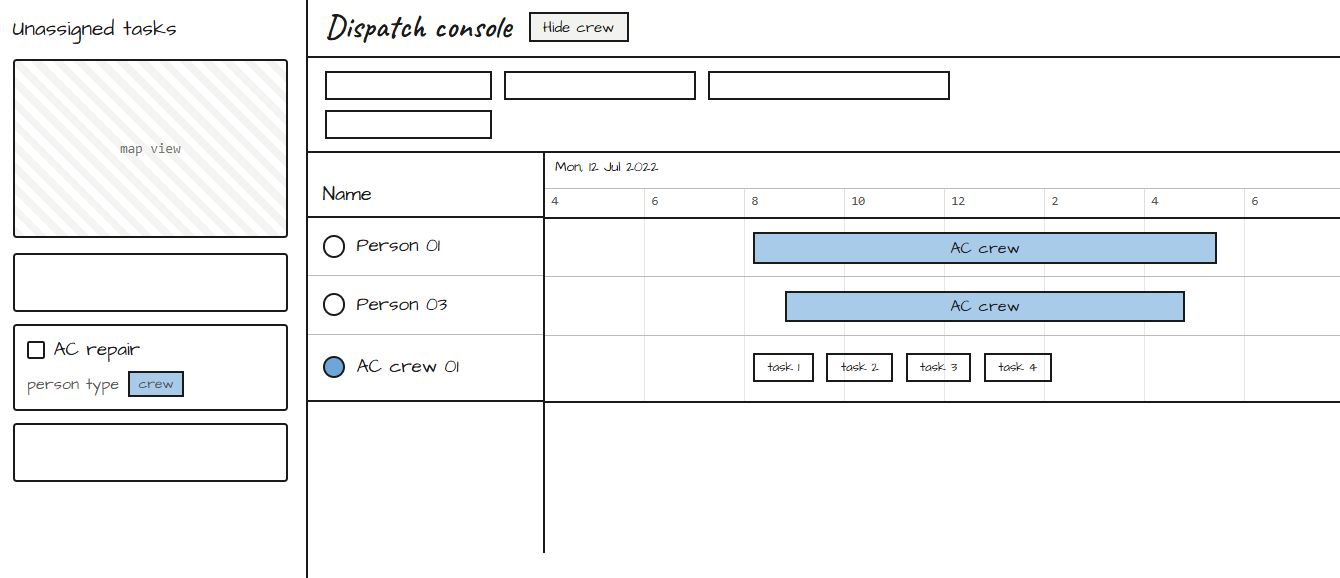
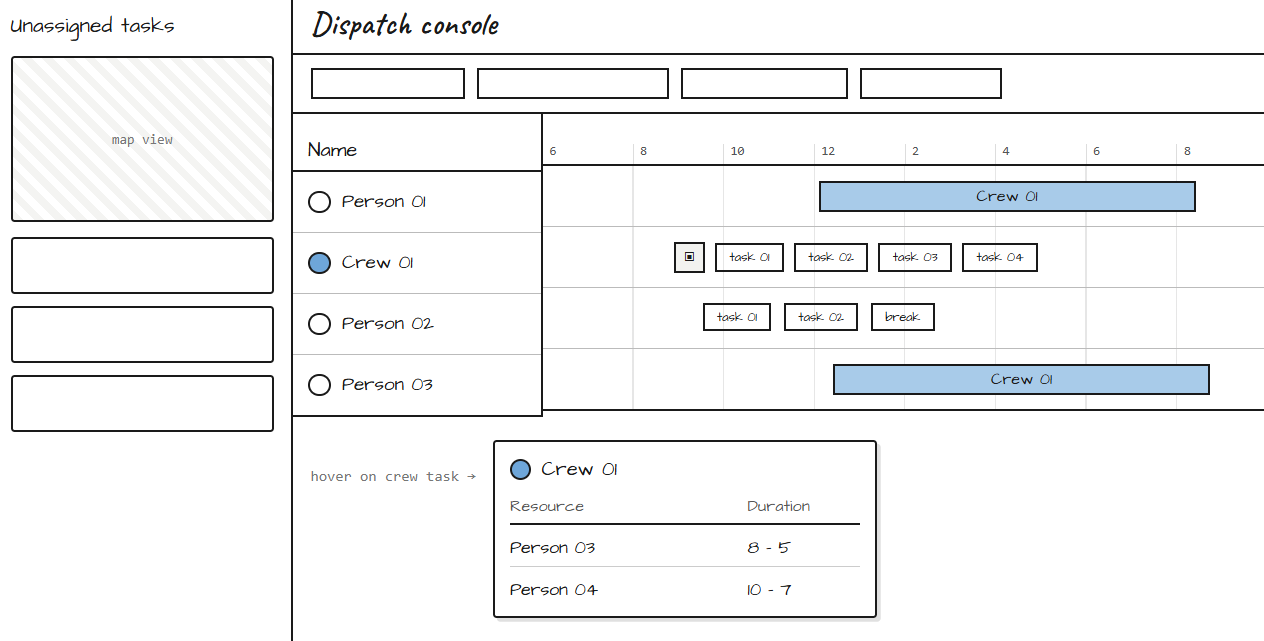
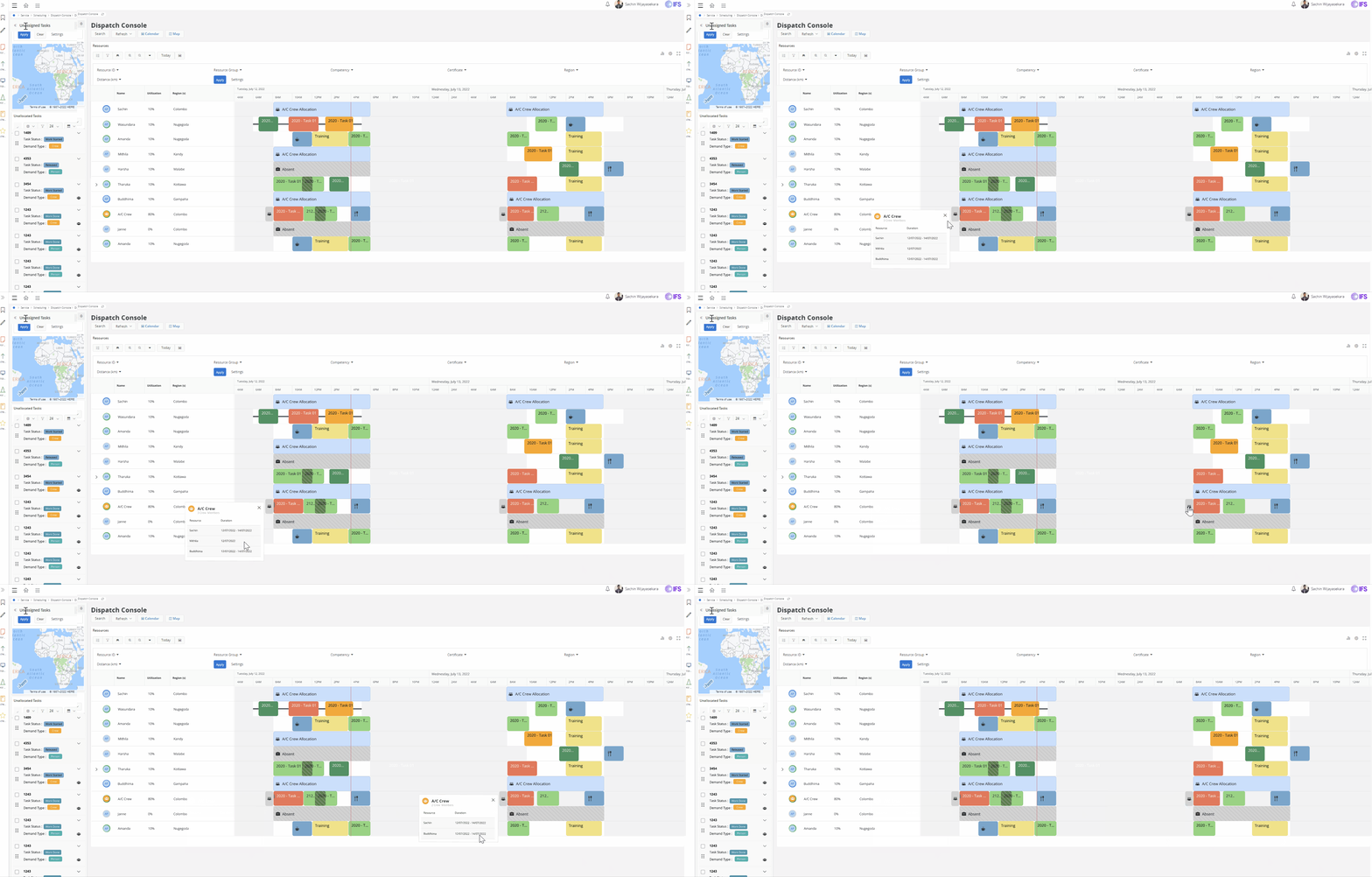
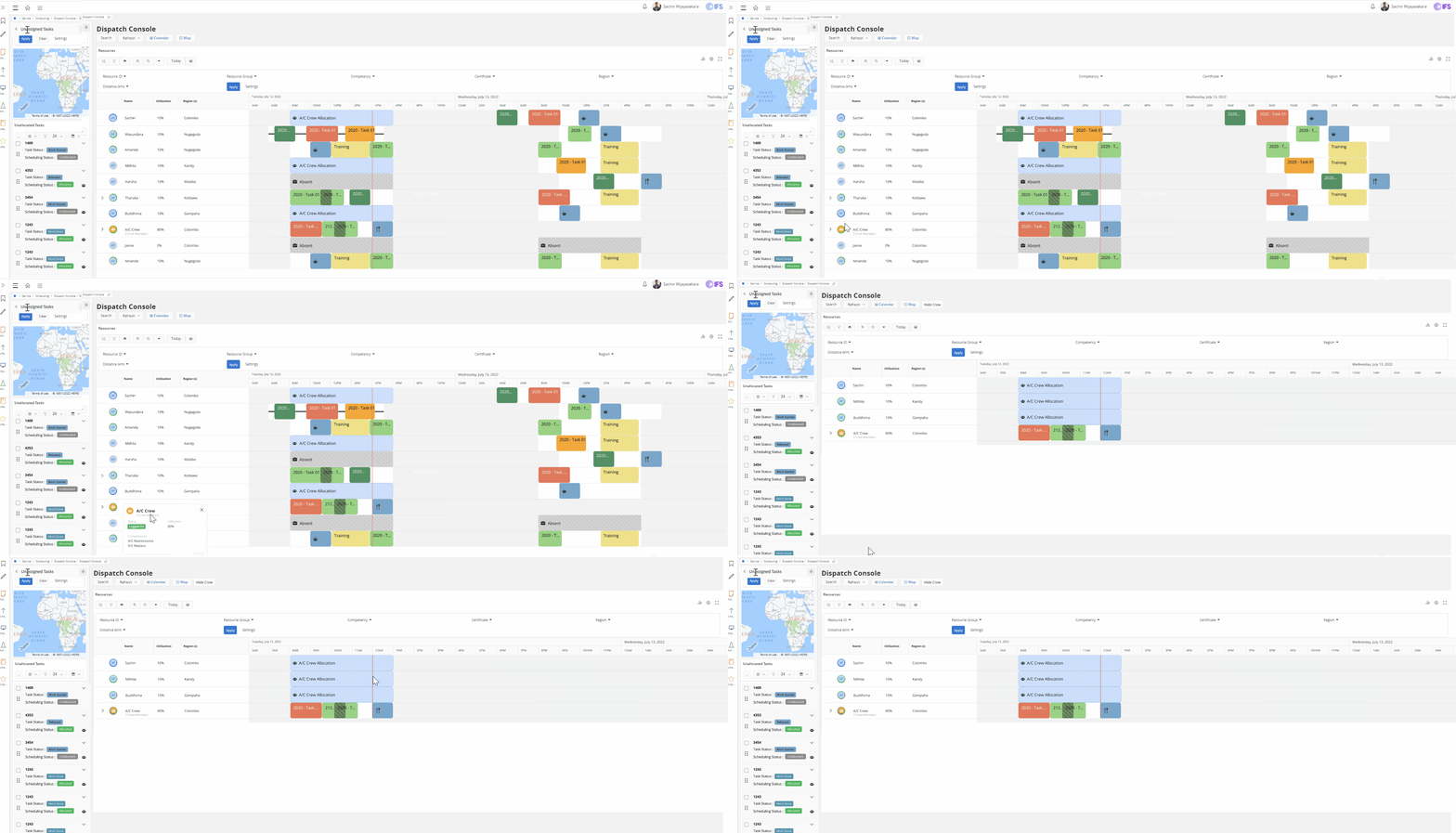
Interactive prototypes allowed us to validate assumptions with real users before any development work began. The key interaction we needed to validate: how dispatchers would access crew detail information within the Gantt interface.
Separate crew detail view
Users could open a crew card and navigate to a separate view to inspect crew members and crew details. Validation revealed this was disruptive — it forced dispatchers to leave their scheduling context at exactly the moment they needed information to make a decision.
Inline crew inspection
We simplified the experience by allowing dispatchers to inspect crew information directly from within the Gantt interface — no navigation, no context loss. This reduced cognitive load, eliminated unnecessary clicks, and kept users focused on the scheduling task at hand.
What this project reinforced
Design for Flexibility
There was no single dispatching workflow that suited every customer. The solution needed to support multiple operational models rather than enforcing one approach.
Context Matters
Dispatchers make decisions quickly. Every additional click or context switch increases cognitive load and slows down a workflow that demands speed.
Discovery Reduces Risk
Investing time upfront in research helped avoid prematurely committing to solutions that would not scale across the diverse range of customer scenarios.
Alignment Is Critical
Artifacts like personas, journey maps, and story maps kept product, engineering, and UX teams aligned on the problem space throughout the project lifecycle.
Measurable improvements to how dispatchers plan and allocate work
Through customer research, workflow analysis, and iterative validation, the redesigned experience improved visibility of resource information, reduced context switching, and enabled users to make scheduling decisions more efficiently within a single planning environment.
Customer feedback during reviews and validation sessions was overwhelmingly positive:
The insights and design decisions from this work influenced subsequent Dispatch Console enhancements and helped establish a stronger customer-centered approach to workforce scheduling within IFS Cloud.